Is it possible that your margins are being silently eroded by the practice of off-budget orders and approval delays? When each department makes purchases through individual routes, your organization’s cost of operation can easily become uncontrollable. Without any centralized management system, it is nearly impossible to keep track of where each rupee is spent.
With the use of state-of-the-art Enterprise Resource Planning (ERP) systems, your procurement operations will change. Your organization will not have to go through the cumbersome process of paper trails for your procurement process. Rather, you will get an ERP purchasing solution, which will help you cut down your business purchasing costs.
What Is an ERP Purchasing System?
Understanding ERP in Procurement
ERP procurement software integration involves linking each procurement process to ensure complete automation of the entire procurement process. This means linking inventories, accounting ledgers, and supplier information into one system.
Functionality of the Purchasing Module
The system will be able to handle the entire procure to pay (P2P) process. The system will generate an automatic conversion of each departmental request into a purchase requisition, quick approval by managers, and issuance of a purchase order to approved suppliers.
Why Do Organizations Require ERP Systems for Controlling Costs?
Use of manual spreadsheets results in high costs due to mistakes, unauthorized spending, and inability to access bulk discounts.
Common Purchasing Challenges Businesses Face
- Manual Request for Purchase Orders: Sluggish processes using paper-based formats slow down the process and result in inaccurate entries.
- Maverick Spend: Employees purchasing goods from outside supplier agreements raises costs.
- Lack of Visibility with Suppliers: Without the help of analytics in procurement, contract negotiations become challenging.
- Duplicate Purchase: Procurement staff from different groups order identical products.
- Inappropriate Stock: Inaccurate estimates in forecasting the demand cause imbalances in stocks.
How ERP Helps Control Business Purchasing Costs
Centralizes All Purchasing Data
Having the Warehouse Management System (WMS) and Customer Relationship Management (CRM) applications linked with each other provides integration between the two systems. There is a common set of real-time inventory data that everyone uses.
Automates Purchase Requisitions and Purchase Orders
Using purchase requisition automation and purchase order automation eliminates manual paperwork. Orders move smoothly from approval to fulfillment without friction.
Improves Spend Visibility
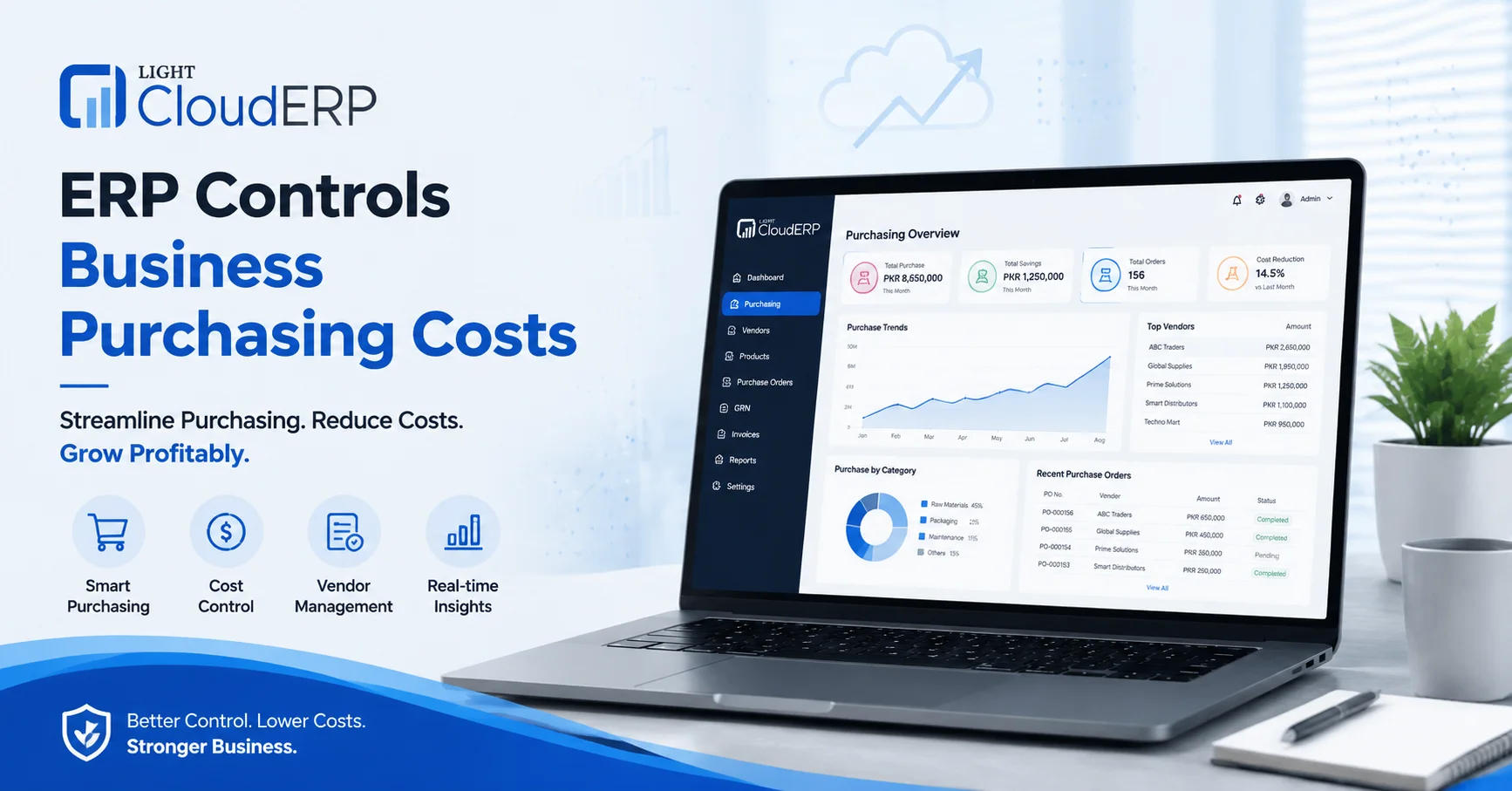
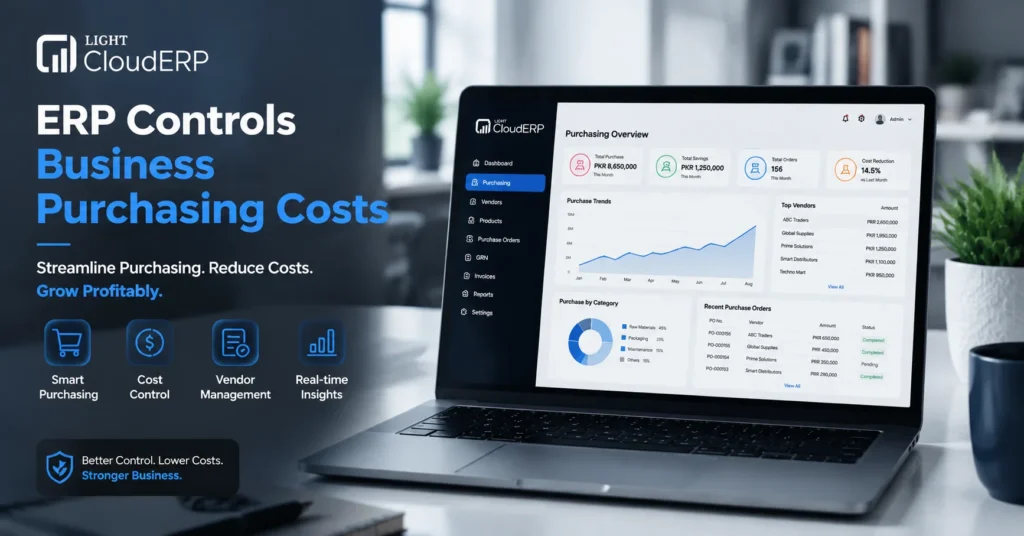
A live procurement dashboard gives leadership clear purchase spend analysis. Managers can review department expenses instantly and stop budget leaks early.
Prevents Unauthorized Purchases
Configuring a multi-level purchase approval workflow stops unapproved orders before funds leave the building. Every transaction must fit designated spending limits.
Smart Purchasing Approval Cycle:
[Purchase Requisition] ──> [Budget Rule Check] ──> [Automated Sign-Off] ──> [PO Issued]
│ │ │
└───────────── Built-In Multi-Level Controls ─────────┘
Optimizes Inventory Purchasing
Linked Material Requirements Planning (MRP) modules evaluate historical usage patterns to generate precise direct procurement reorder points, lowering carrying expenses.
Strengthens Supplier Management
Vendor performance scorecards ensure vendors are responsible for meeting the terms of delivery times, quality, and price.
Ready to stop purchasing leaks in your business?
Take total control over your business spending with Lightcloud ERP. Our intelligent procurement modules eliminate manual paperwork, enforce strict approval rules, and give you complete spend visibility.
Talk to the Lightcloud ERP team today by calling +92 3080111822 or emailing info@lightclouderp.com to book your free operational demo!
Competitor Insights: Advanced Cost Control Strategies
Deep Spend Analysis
Conducting regular purchase spend analysis categorizes company outlays across both direct procurement (raw materials) and indirect procurement (office supplies, utilities). Identifying volume trends unlocks better bulk pricing.
Total Cost of Ownership (TCO)
Intelligent purchasing takes into consideration more than just the initial price tag. Considering the Total Cost of Ownership (TCO) takes into account shipping, tariffs, warehousing costs, and other maintenance considerations to help groups determine value.
Cost Avoidance vs. Cost Savings
Hard cost savings reduce current spending directly. Cost avoidance strategies, on the other hand, avoid future costs by cancelling unnecessary subscriptions, avoiding expensive rush delivery fees, and identifying any incorrect prices charged by vendors.
AI-Powered Procurement Suggestions
These new technologies apply procurement intelligence for recommending the best time to reorder, detecting any questionable invoice entries, and identifying any supplier risk management issues before the supply chain fails.
ERP vs. Manual Purchasing Process
- Manual Purchasing:
- Paper-based sign-offs and slow manual approvals
- Limited visibility into department budgets
- Manual purchase order creation with higher error risks
- Siloed vendor data and difficult expense reporting
- ERP Purchasing:
- Automated multi-level approval rules
- Real-time spend visibility on live dashboards
- Instant purchase order automation
- Integrated ERP supplier management software with instant reporting
Business Benefits of ERP in Purchasing Management
- Lower Procurement Costs: Unlocks bulk volume discounts and secures negotiated contract pricing.
- Tighter Budget Control: Validates available funds automatically before purchase orders are issued.
- Eliminated Maverick Spending: Blocks unapproved purchases outside preferred vendor networks.
- Smarter Strategic Sourcing: Uses historical business intelligence (BI) data to negotiate stronger vendor contracts.
- Faster Source-to-Pay Cycles: Remove administrative bottlenecks to speed up supplier deliveries.
Key ERP Features That Reduce Purchasing Costs
- Purchase Approval Workflows: Customizable multi-tiered sign-offs based on spend thresholds.
- Procurement Analytics Dashboard: Visual Key Performance Indicator (KPI) tracking for real-time spend oversight.
- Budget Control Tools: Live account validation stops accidental budget overruns.
- Vendor Management System: Comprehensive records tracking supplier histories and compliance metrics.
- Electronic Data Interchange (EDI): Seamless digital document exchange directly with key vendor systems.
Industries That Benefit Most from ERP Purchasing
- Manufacturing: Tracks raw material supplies accurately to prevent costly factory floor downtime.
- Retail & Wholesale: Balances stock reorder quantities across multiple store locations smoothly.
- Construction: Manages project-specific materials, subcontractor costs, and equipment rentals.
- Distribution & Logistics: Coordinates fleet maintenance purchases alongside warehouse restocking.
Best Practices for Maximizing ERP Purchasing Savings
- Standardization of procurement policies: Make it mandatory for all purchases to be done digitally.
- Monitor important metrics: Follow lead time of vendors, order accuracy percentages, and variances on price weekly.
- Conduct audits regularly: Perform an audit on procurement activities and identify any rogue expenditures.
- Train internal teams: Ensure that the employees know the right way to use self-service portals for requisition.
How to Choose the Right ERP for Purchasing Management
Selecting the right ERP purchasing software for SMEs requires looking at software scalability, ease of use, mobile access for remote managers, and cloud flexibility. Choosing a system like Lightcloud ERP gives your organization modular tools that adapt seamlessly as your enterprise expands.
Conclusion
Manual procurement systems make you open to invisible cost drains, unauthorized purchases, and supplier delays when it comes to managing business procurement. Shifting to an integrated digital procurement center will turn your procurement department into a profitable machine.
Automated daily procurement, strict spending control, and real-time analytics will give your company complete transparency in financial matters. Looking to optimize your procurement management and save money in the long run? Contact the experts at Lightcloud ERP by writing us an email at info@lightclouderp.com or dialing +92 3080111822!
FAQs
How does ERP lower costs on purchases?
The ERP system lowers costs through automation of purchase orders, prevention of unauthorized off-contract spend, and analysis of vendor performance to obtain lower bulk rates.
What is the function of ERP for procurement process management?
An ERP system provides integration of all stages of the procurement process into one system, including inventory requirements, procurement requisitions, approval process, agreements with suppliers, and payments.
How can ERP increase supplier performance?
ERP system evaluates delivery time, pricing accuracy, and quality of goods by suppliers with the help of an automated performance scorecard.
Can ERP help to avoid overspending?
Yes, an ERP system controls budgeting strictly and automates the approval process, thus preventing unauthorized purchases from being made.
What is procurement cost optimization in ERP?
It is the process of using ERP data and analytics to cut sourcing expenses, lower inventory carrying costs, and eliminate administrative waste across the purchasing cycle.
How does ERP enhance PO handling?
It automatically creates purchase orders for accepted requests, sending them directly to the supplier while monitoring delivery status in real-time.
Does ERP help in automating purchase approvals?
Yes. Purchase request approvals are automatically assigned to authorized managers using predefined criteria such as the value of the order or the type of product.
How does ERP enhance purchasing transparency?
Every purchase request and approval, invoice, and payment is recorded in a centralized record that allows managers full transparency of their expenditures.