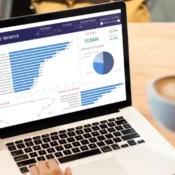
How to Choose the Right Accounting ERP for Your Business Needs?
Choosing the Right Accounting ERP for Your Business
Selecting the right Accounting ERP is a game-changer for managing your finances efficiently. But with countless options on the market, how do you choose the one that fits your business best? This guide will walk you through everything you need to consider.
Why Invest in an Accounting ERP?
An Accounting ERP streamlines your financial processes, reduces human error, and gives you access to real-time data. It helps you:
Automate routine tasks
Eliminate manual spreadsheet work
Improve accuracy and compliance
Make faster, smarter financial decisions
With the right ERP, your finance team becomes more productive—and your business runs smoother.
What to Look for in an Accounting ERP
Before making a decision, consider these key features:
Customization
Choose an ERP that can be tailored to match your specific workflows.
Integration
Ensure it connects seamlessly with your existing systems—banking, CRM, inventory, payroll, etc.
Scalability
Your business will grow—your ERP should too.
Ease of Use
A clean, intuitive interface shortens the learning curve and boosts user adoption.
Real-Time Reporting
Stay on top of your financial health with instant, up-to-date insights.
Cost-Effectiveness
Look beyond price—evaluate the ROI and long-term value.
The Impact of the Right ERP
Outdated reports, manual processes, and disconnected systems don’t just slow your business down—they quietly drain productivity and limit growth. When your financial data lives in multiple tools, decision-making becomes reactive instead of strategic.
A modern accounting ERP brings everything together in one intelligent system, giving you real-time visibility into your finances and operations. With accurate, up-to-date data at your fingertips, you gain the clarity needed to move faster and smarter.
A powerful ERP helps you:
Make proactive decisions using real-time financial insights instead of outdated reports
Improve cash flow management by tracking invoices, payments, and expenses in one place
Increase operational efficiency by automating repetitive tasks and reducing manual errors
Strengthen financial control with better reporting, forecasting, and compliance
Scale with confidence as your business grows without outgrowing your systems
The right ERP doesn’t just support your business—it becomes a foundation for long-term success.
Ready to Take the Next Step?
Investing in the right accounting ERP is a smart move toward sustainable growth, efficiency, and peace of mind. It’s not just about software—it’s about choosing a system that aligns with your business goals and supports smarter decision-making every day.
If you’re not sure where to begin, you don’t have to figure it out alone. Our experts are here to understand your needs, answer your questions, and guide you toward the ERP solution that best fits your business—today and in the future.
📞 Contact us today to schedule a free consultation and take the first step toward smarter financial management.
FAQs
Q: How does an accounting ERP improve efficiency?
An accounting ERP automates time-consuming manual tasks like invoicing, reconciliation, and reporting. It reduces errors, centralizes data, and provides real-time insights, allowing faster and more informed decisions.
Q: Can an ERP be customized for my business?
Yes. Most modern ERP systems are highly flexible and can be customized to match your workflows, reporting needs, industry requirements, and business size.
Q: Is ERP suitable for small businesses?
Absolutely. Many ERP solutions are specifically designed for small to mid-sized businesses, offering scalable features that grow alongside your company without unnecessary complexity.
Q: How long does it take to implement an ERP?
Implementation time varies depending on business size and complexity, but many cloud-based ERPs can be deployed quickly with minimal disruption to daily operations.
Q: Will an ERP replace my existing accounting software?
In most cases, yes. An ERP integrates accounting with other core functions like invoicing, inventory, payroll, and reporting—eliminating the need for multiple disconnected tools.

All Categories
Recent Posts
Role of Purchasing in Effective Supply Chain Management
What is the Difference Between Purchasing and Supply Management?