Understanding the exact Difference Between Purchase Order and Invoice workflows protects your firm from costly financial leaks. This practical guide simplifies the complete Business Purchasing Process for local Pakistani business owners. A Purchase Order (PO) is a document sent by a buyer to a vendor before delivery. It outlines exactly what they want to buy. A Purchase Invoice is issued by the vendor after delivery, requesting payment. The PO is the promise to buy. The invoice is the bill to pay. Mastering this Procurement Process secures your cash flow. It improves your internal Accounts Payable Process. It also introduces powerful Purchase Order Automation benefits to your growing team.
What Is a Purchase Order (PO)?
A Purchase Order (PO) is an official document sent by a customer to a supplier. It acts as a formal request to buy specific items. The document lists the exact quantity, the agreed unit price, and the expected delivery date. When the vendor accepts this paperwork, it becomes a legally binding contract. It locks in the shipping terms and the final billing address for the entire transaction. Knowing what a purchase order is protects your company from sudden price spikes.
What Is a Purchase Invoice?
A Purchase Invoice is a vendor payment request sent by the seller to the financial team. This document demands actual payment for the items that were successfully delivered. It shows the invoice amount, the applied sales tax, and the total balance due. Your accounting team registers this document under current liabilities until it is paid. It contains an official invoice number and references the original PO number for quick tracking. Understanding the meaning of this purchase invoice keeps your tax records clean.
Purchase Order vs Purchase Invoice: Key Differences
These two business documents serve completely different purposes during the purchasing process. They are generated at opposite ends of the transaction timeline. A PO initiates the buying cycle and protects the customer. An invoice finishes the cycle and requests cash from the vendor. They carry different legal weights in your accounts payable process.
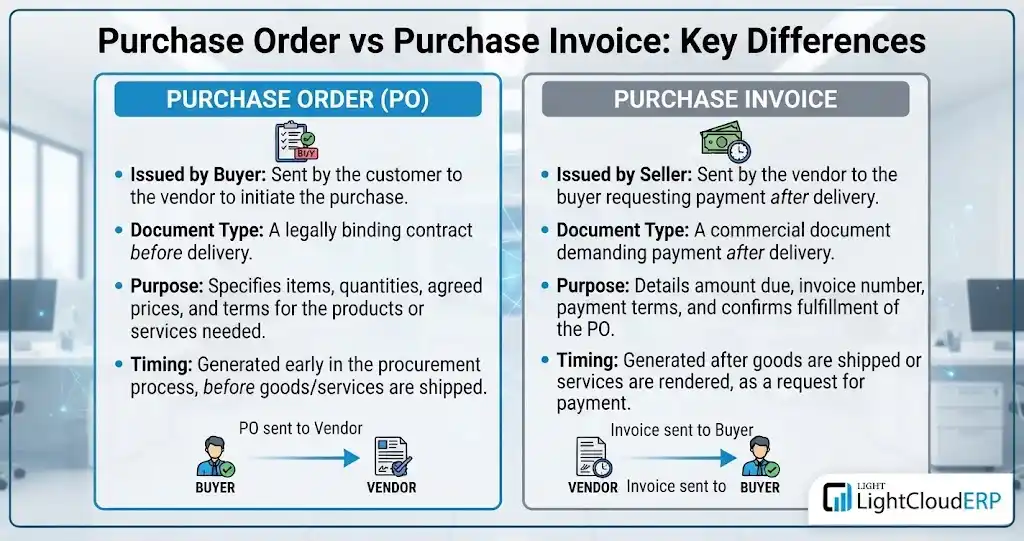
Quick Comparison Table: PO vs Purchase Invoice
| Feature | Purchase Order (PO) | Purchase Invoice |
| Created By | The Buyer / Customer | The Seller / Vendor |
| Purpose | To order goods and lock prices | To demand payment for delivered items |
| Time of Creation | Before the goods are shipped | After the goods are delivered |
| Impact on Accounts | Tracks future commitments | Increases accounts payable (AP) |
| Key Attribute | Includes a unique PO Number | Includes a unique Invoice Number |
When Is a Purchase Order Used?
You need a formal order document when purchasing large amounts of raw inventory. For example, a commercial bakery needs to order fifty bags of flour from a large supplier. Sending a clear order document protects the buyer from sudden price changes. It helps your procurement department control the company's budget before any money is spent. It also specifies the exact shipment date and the required shipping address.
When Is a Purchase Invoice Used?
An invoice is always required when a transaction is officially finished. The vendor creates this bill right after sending the goods or performing the services. Your internal finance team needs this document to release the final funds. It acts as the ultimate proof of expense for your annual tax filings. The document details the specific payment terms and any early payment discount options.
How Purchase Orders and Purchase Invoices Work Together
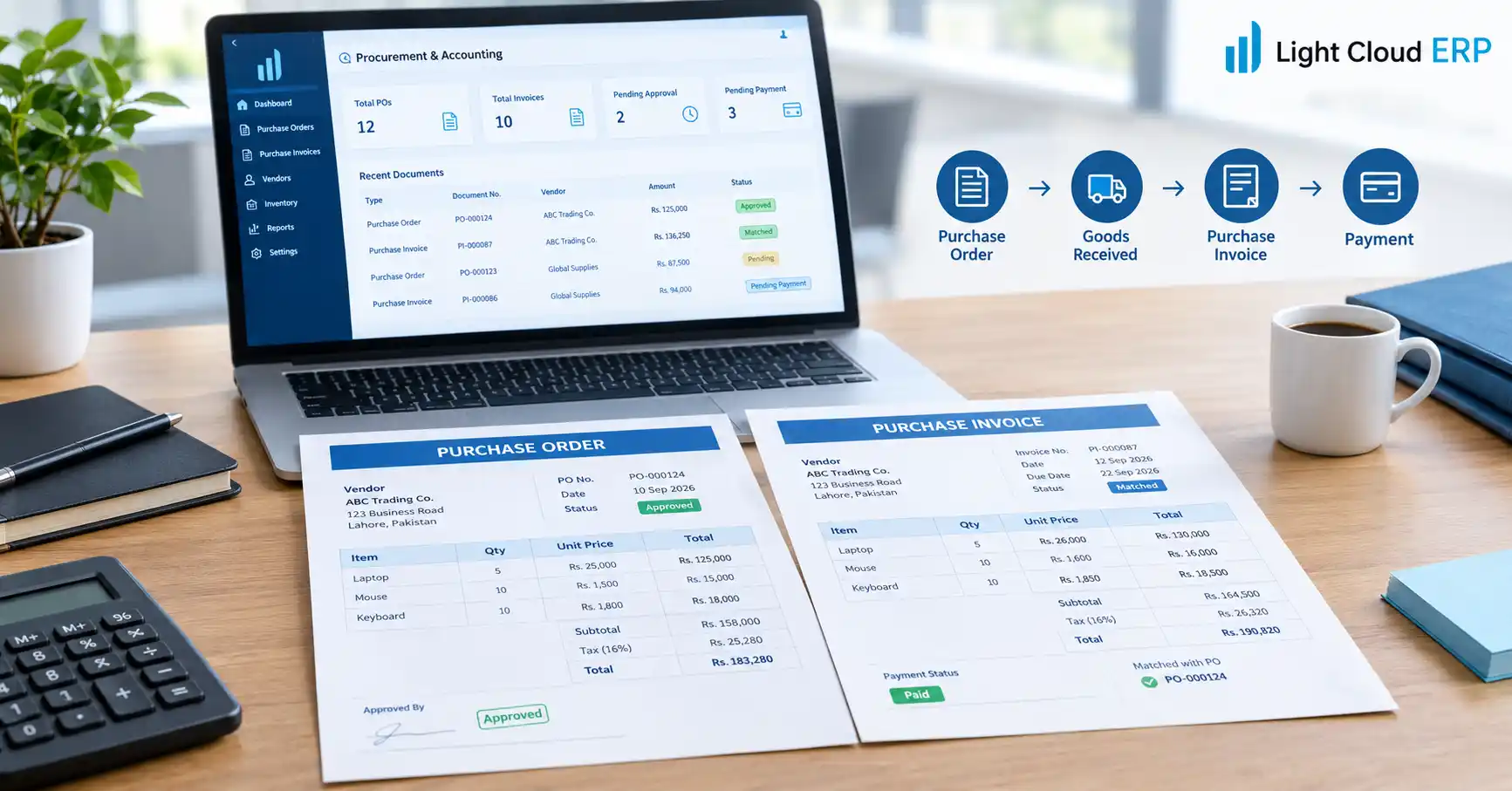
These papers form the foundation of proper financial record-keeping in your firm. The process starts when you issue an official PO to your supplier. The vendor prepares your goods and ships them out with a receipt. Then, the vendor sends a final bill referencing your original purchase order number. Your accounting department matches these forms to complete the invoice-to-pay cycle safely.
Understanding the Three-Way Matching Process
Your accounting team uses a process called three-way matching to prevent financial fraud. This security check compares three critical documents before sending any money. First, the team checks the original order document containing the purchase order number (PON). Next, they inspect the goods received note (GRN) from the warehouse team. Finally, they compare these two files against the incoming vendor invoice. This careful invoice verification step ensures that you only pay for what you actually received. It keeps your accounts receivable (AR) and payable records perfectly accurate.
Streamline your daily business operations today with LightCloud ERP Business Automation tools!
Information Included in a Purchase Order
A proper order form contains crucial details about your upcoming delivery. It leaves no room for confusion between trading partners.
- Your official company name and registered billing address.
- The item description, quantity, and agreed unit price.
- The exact requested delivery date and shipping terms.
- A unique, traceable purchase order number for tracking.
Information Included in a Purchase Invoice
An invoice acts as a legal demand for cash from your supplier. It must comply with local Pakistani tax laws perfectly.
- The unique invoice number and the matching PO number.
- The invoice amount before taxes and the total sales tax.
- The final balance due and clear payment terms.
- The supplier's active contact information and banking data.
Benefits of Using Purchase Orders
Implementing a formal PO system gives your management team deep financial control. It stops unauthorized spending before it happens.
- It locks in the final cost of goods early.
- It helps monitor your overall inventory management budgets.
- It acts as legal proof if disputes arise later.
Benefits of Using Purchase Invoices
Receiving proper invoices ensures your accounts team stays organized during audit season. It builds transparent spending habits.
- It tracks your short-term current liabilities accurately.
- It simplifies your monthly invoice reconciliation routines.
- It lets you claim legitimate input tax credits easily.
Common Mistakes Businesses Make When Managing POs and Invoices
Many Pakistani businesses lose money because of sloppy record-keeping. They skip basic verifications to save a few minutes.
- Paying bills without checking the goods received note.
- Ordering expensive office supplies without a signed PO.
- Losing track of vendor bills, which ruins the cash flow.
Purchase Order vs Purchase Invoice vs Receipt
These three documents track different stages of a single transaction. A PO requests the order from the vendor. A purchase invoice demands the final payment from the customer. A receipt proves that delivery and payment are fully complete.
Purchase Order vs Purchase Invoice vs Sales Order
People often confuse a PO with an official sales order. A customer creates the PO to start the purchase. The vendor creates the sales order internally to confirm the request. The vendor then issues the purchase invoice to request the final cash.
Why Manual PO and Invoice Management Creates Problems
Relying on physical paper bundles slows down your entire enterprise. Paper files get lost easily between the warehouse and the office. Manual data entry causes massive errors in item description tracking and pricing. It delays your payment processing and causes you to miss early discounts. Your staff wastes valuable hours fixing mistakes instead of growing the brand.
How LightCloud ERP Simplifies Purchase Orders and Invoice Management
The modern LightCloud ERP Procurement Module automates your entire corporate buying cycle. It eliminates messy paperwork by digitizing your workflows from day one. The software connects your purchasing department directly with your accounting team. You can generate a flawless purchase requisition inside the system instantly. The platform runs an automatic invoice matching process to stop duplicate bills immediately.
Key Features of LightCloud ERP for Procurement and Accounts Payable
Choosing a local automated solution gives your enterprise complete control over its numbers. The platform scales easily as your trade volumes expand.
- LightCloud ERP Purchase Management: Tracks every single active vendor contract smoothly.
- LightCloud ERP Invoice Management: Automates your internal invoice approval workflow completely.
- LightCloud ERP Accounts Payable: Monitors your liabilities and cash positions continuously.
- LightCloud ERP Vendor Management: Rates your suppliers based on delivery speeds.
Conclusion
Mastering your buyer and seller documents protects your company from unexpected financial losses. Using a clear purchase authorization process keeps your warehouse and finance teams perfectly aligned. Investing in LightCloud ERP Inventory Management helps you eliminate chaotic manual paperwork for good. It optimizes your entire invoice-to-pay cycle while securing your profit margins. Take charge of your inventory procurement and outpace your business competitors this year.
Upgrade your corporate systems with LightCloud ERP Financial Management solutions today! Call our expert helpline now to get your customized software quotation.
Contact Information
Phone: +92 3080111822
Frequently Asked Questions
What is the main difference between a PO and a purchase invoice?
A PO orders goods from a vendor, while a purchase invoice demands payment for those delivered goods.
Who creates a purchase order in a business transaction?
The buyer or procurement department creates the purchase order to initiate a formal buying request.
Can a business use a purchase invoice as a purchase order?
No, because an invoice is a bill for completed deliveries, not an authorization to buy items.
What is a purchase order number used for?
It tracks the order and helps match the original request with the final vendor bill.
Why is three-way matching important for Pakistani businesses?
It prevents payment errors, reduces internal financial fraud, and ensures accurate inventory tracking.
Does a purchase order impact my accounts payable immediately?
No, it only records a future financial commitment until the actual invoice arrives.
What happens if an invoice does not match the purchase order?
The finance team holds the payment until the vendor resolves the pricing or quantity differences.
Can small retail shops benefit from purchase order automation?
Yes, automation saves time, reduces manual paperwork, and keeps stock levels accurate.